- HOME ›
- Speech examples ›
- Storytelling speech sample
A storytelling speech sample: From chains to legacy - the impact of slavery
A true narrative speech illustrating the power of voice, body language, and story
Contributed by: Emily, a Toastmaster member | Canada
This storytelling speech sample demonstrates how personal narrative, historical truth, and emotional insight can be woven together to create a powerful speaking experience.
'From Chains to Legacy – the Impact of Slavery' is a compelling example of narrative speechwriting that brings history to life through an imagined character: Kimoni, an ancestor, a grandfather from long ago. His story invites listeners to feel, reflect, and connect.
Written and delivered for a Toastmasters Pathways project focused on vocal variety and body language, it shows how story-driven speeches can humanize complex subjects, engage an audience deeply, and leave a lasting impression long after the final words are spoken.
From chains to legacy - the impact of slavery
"I’m a slave, from a land so far
I was caught, and
brought here from Africa"
So sang the Mighty Sparrow*.
(*Click the link for more about 'The Calypso King' Mighty Sparrow from Trinidad and to hear his song.)
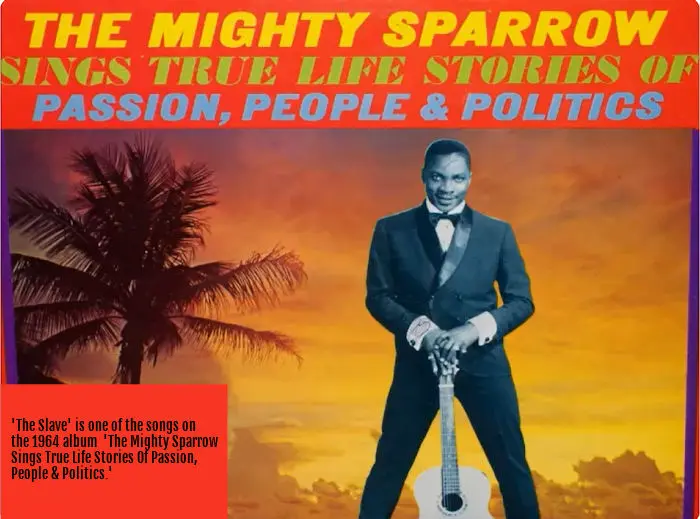
For me, that song was a moment of reflection, then an awakening.
Until then, with my solid colonial education, I saw slavery as a distant blip of history.
Not something that shaped me or my future.
That song led me back to Africa with a new level of awareness.
I thought of Kimoni, my grandfather many times removed. This was how he felt, how he experienced life far from Africa, as he toiled in the sugar cane and cotton fields, under the hot Caribbean sun.
As weeks, months, years passed, with no respite from hard labor, he thought to himself:
“What will the fate of my descendants be, if any survive at all? Will there be any hope of freedom?”
Back home, Kimoni was a hunter. Well regarded by his tribe, hoping to be the future chief.
Then one day he and several companions returned home after a successful hunt. To find the rest of the villagers in a large huddle chained together.
White men aimed rifles at them.
Around them rival tribesmen stood, with spears and knives.
"Betrayed!", Kimoni thought. There was no chance, not even a thought of resistance. They were rounded up and marched westward, to the sea.
Two ships waited, sails billowing in the wind.
In a scenario that was repeated countless times, in the dreadful voyage from Africa to the New World, they were herded into the bowels of the ships. Roughly 200 men, women, and children were already there.
Seasickness, lack of air, the relentless rolling of the ship made those 12 weeks a period of unbelievable misery. The daily exercise hour on the pitching and rocking deck, the sight of a vast ocean as far as the eye could see, terrified these inland dwellers even more.
During that horrific time their only thought was: “How do we stay alive?”
Some lost the battle, because every few days, two or more were untied, taken up on deck. Never to return.
The fish fed well, during that long journey.
Finally, land.
Still in chains, they were led to a rough platform on the beach.
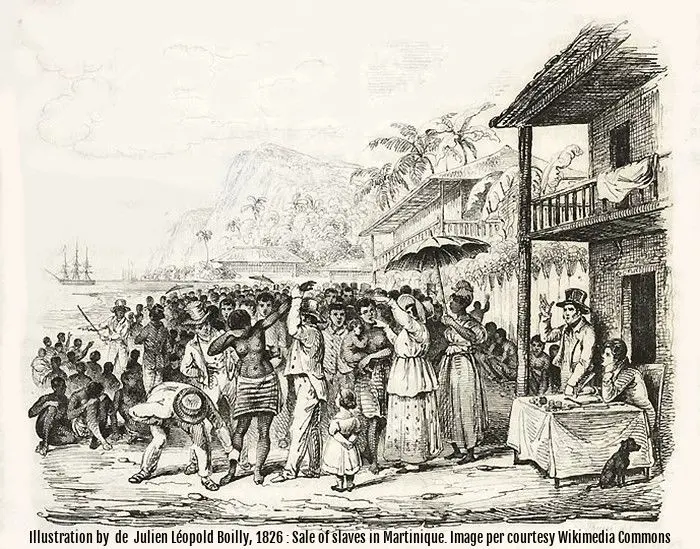
Then the auction began. A literal cacophony of sounds filled the air: the wailing of the slaves as husbands were separated from their wives, as children were torn from their mothers, along with the yelling of the slavers, and the intermittent crack of the whip.
In the end, Kimoni, no wife, no son, was taken with his group through the hills to the plantation, where he would spend the rest of his days.
Can you imagine how he felt? Unfamiliar place. Unfamiliar language. Grieving inside for the loss of his family, his home.
The first morning of his new life, the overseer handed him a hoe.
“Dig!”
Kimoni drew himself up proudly.
“I am hunter! I no dig! It’s women who...”
WHACK!
The whip slashed across his back. Instinctively he raised his fists. A barrage of blows drove him to his knees.
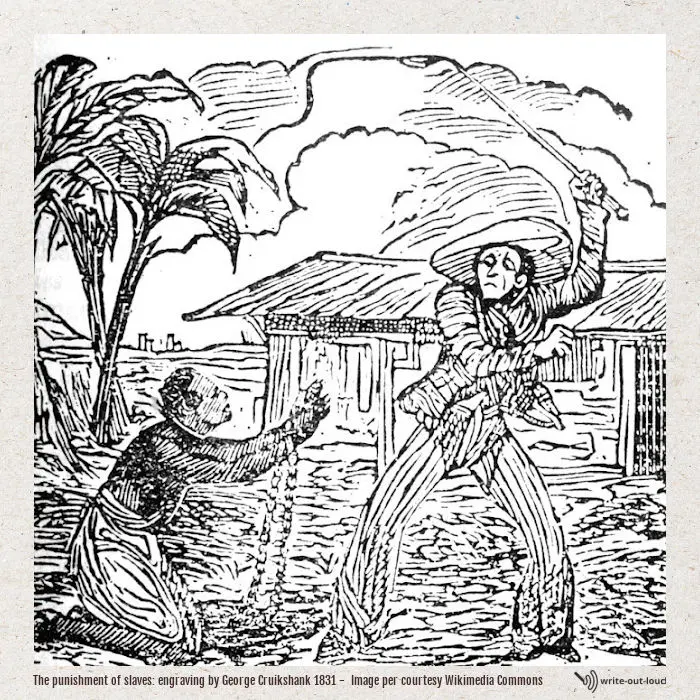
What did he do? He dug. They all dug. The lesson was hard. But he learned.
Another hard lesson was to follow. The next day, the slave master said "You, Joseph, come here.”
Kimoni looked around in bewilderment. “Yes, it’s you. Your name is Joseph now. Joseph Anthony.”
Anthony was the surname of the plantation owner. Thus, in one casual moment, Kimoni was stripped of his personal identity.
Days passed. Months. Years.
The slaves accepted their new reality, as slaves died and were replaced. A life of toil. Little leisure. Conversion to Christianity, with missionaries preaching that serving their masters was like serving God. Still, they endured.
They picked up English, after a fashion. Used it on the “job”. Outwardly they were the docile subservient chattel their masters wished them to be. Inside, some of them remained unbroken, waiting for the tide to turn. That flame never died, such is the power of the human spirit.
My grandfather and his peers were luckier than many others in that they were taken to a tiny island, where, even though chances of escape were minimal, proximity made the slave/master relationship somewhat more benign than elsewhere. Some of them even learned skills, such as carpentry, and repairing tools.
But in their free time, they remembered.
They retold their stories. They kept the names of their lost family members alive. They kept their music alive. They kept hope alive. They made for themselves moments of joy.
Outwardly, they were docile, even subservient, another man’s property. But inside, still a burning flame, waiting for a change, a sign.
The music, the bottomless optimism. That flame…
A lasting part of their legacy.
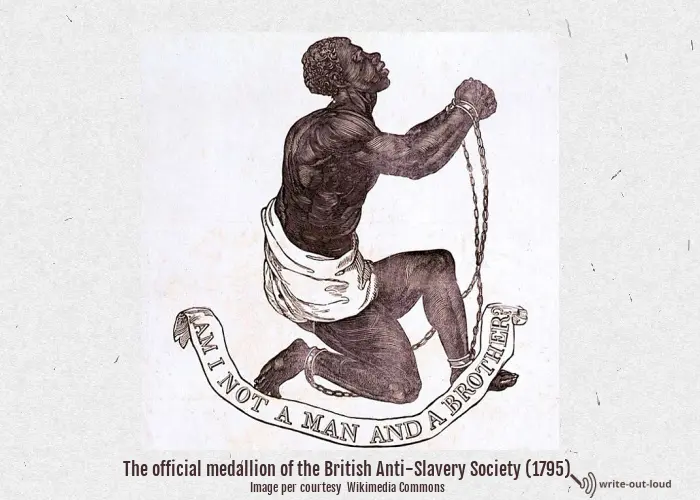
Kimoni died a slave. But he had heard rumors. (House slaves listened at doors) AND…
No new slaves had come to the plantation in the past year.
Just maybe, he hoped. Maybe, one day, freedom for the next generation.
In the 1830s, Britain finally abolished the slave trade, then freed the slaves. That’s less than 200 years ago.
The road to true freedom still continues. The lash is gone. Forced labor, mostly eradicated.
But the human spirit, human dignity, can still be demeaned, brutalized, psychologically shackled.
Yet, if Kimoni could glimpse our present, he would be proud.
We rose. Because human beings are resilient. We adapt. We rise.
Three hundred years of servitude did not destroy that flame. We are free. We flourish.
And now, despite the one enduring truly destructive and insidious remnant of the slave trade, entrenched racism, affecting white and black alike, we continue to contribute to whatever is good in the world. And at the same time, we also commit to keeping that flame burning, for the generations yet to come.
That is your legacy, grandfather.
The person behind 'From chains to legacy'
Emily, the writer of this speech, sent me it to me to read. I was immediately intrigued.
When I asked if I could publish it as a great example of a storytelling speech - one naturally drawing the person delivering it to use evocative body language and vocal variety, she graciously said yes.
That prompted more questions and I discovered that Emily belongs to a Toastmasters International club and this speech was prepared to meet the requirements of the third Level One Pathways projects - An introduction to vocal variety and body language.
What Emily wanted to achieve with this speech
Emily said the primary purpose of her speech was to humanize the people taken forcibly from Africa as slaves. She wanted to shine a light of normalcy on those who were treated as mere chattels and a source of free labor.
To help do that she created a character, Kimoni, a typical individual who became a representative of the millions who were removed. Emily says, in her mind he was 'every' enslaved African.
She also wanted to give listeners a glimpse of a past that continues to profoundly impact its descendants today.
Despite slavery being abolished in the 1830s the negative psychological, social and economic inequalities echo on.
She says, while the experiences of Africans taken to the West Indies were not all the same, and also differed somewhat from those taken to the Americas, the overall results are similar.
Although there have been some positive changes, and younger generations are less affected, racism and discrimination still exist.
In her mind, the true legacy, the honorable one worthy of celebrating, is that of the human spirit who insists on its worth irrespective of its circumstances.
Emily gave the speech, and what happened?
She reports: 'Again, I went over the 5–7-minute time limit, thus eliminating myself from our club's 'Best Speaker of the Evening' contest. However, the winner insisted I take the ribbon, regardless of the outcome. I didn’t know what to do, but she wouldn’t take it back!'
I wanted my audience to feel something, and it seems they did. A few said I was an excellent storyteller, and the speech could have been competitive, if I'd kept to time, at our recent District Level Contest.
I’m reluctant to do another speech. I’m now wondering if I should quit while I’m ahead…!*
It’s a great effort for me to overcome my natural reserve and shyness, so this was a triumphant success.'
* She hasn't quit. That was a joke. ☺ She's currently working on her next project.
More about Mighty Sparrow & slavery
Mighty Sparrow
Mighty Sparrow (aka the King of Calypso) is a singer based in Trinidad. Emily was pushed to find out more about her own history through listening to him sing 'The Slave'. She then discovered the colonial version of events she was taught while in school was seriously incomplete.
- Find out more about Mighty Sparrow (Wikipedia)
- Read the lyrics of the song 'The Slave'
- Listen to Mighty Sparrow sing 'The Slave'
Slavery in the Caribbean
These links provide a starting point if you want more information.
- Slavery in the British and French Caribbean - an introductory overview (Wikipedia)
- Saint Vincent and the Grenadines - an introductory overview (Wikipedia)
- Historians deliver first volume of St. Vincent and the Grenadines’ official history - a 2025 Caribbean National Weekly article on the first official volume of the nation's history, covering events up to 1838 and the abolition of slavery.
- Ancestors of Paradise - a website to use to investigate Caribbean genealogy/ancestry.
- Slavery Images - A visual record of the African slave trade and slave life in the early African diaspora: 1200 images for use by teachers, researchers, students, and the general public.

Onsite resources for storytelling speeches
If you're looking for ideas for a narrative speech or for help with body language and vocal variety, check the links below.
Speech topics that prompt telling a story
- 125 narrative speech topics with guidelines for choosing a topic and a printable speech outline to use, one especially formatted for a narrative or storytelling speech.
- 60 vocal variety and body language speech topic suggestions, with guidelines. These will work well for Toastmasters International Pathway speech projects Level 1, project 3: Introduction to Vocal Variety and Body Language and Level 2, project 5: Effective Body Language
Body language and vocal variety
- The vocal aspects of speech delivery - 9 features of effective speech delivery (which includes vocal variety).
- Why is eye contact important? Information about eye contact with activities for teaching and practicing it.
- Characterization techniques for effective storytelling in speeches: exercises to develop compelling body language and voice.
- Teach yourself body language: becoming aware of and working with our habitual unconscious body language and gestures to increase the effectiveness of our speech delivery.

About the Author: Susan Dugdale, founder of write-out-loud.com, is a qualified teacher of English and drama with over 40 years of experience. Drawing on her professional expertise and her personal journey from shyness to confidence, Susan creates practical, real-world resources to help people find their voice and speak with power.



From fear to fun in 28 ways
A complete one stop resource to scuttle fear in the best of all possible ways - with laughter.